


Ecuadorian Amazon
Ecuadorian Amazon Tours offer an unforgettable journey into one of the world’s most biodiverse regions. Explore lush rainforests, encounter unique wildlife, and connect with indigenous communities who share their traditions and ways of life. These responsible tours prioritize environmental conservation and cultural respect, ensuring your adventure contributes to the preservation of this extraordinary ecosystem while supporting local livelihoods.

8 Days Andes & Amazon Multisport
8 days, 7 nights
From US$ 1599

Discover the XIX Vuelta Master al Ecuador
9 days, 8 nights
From US$ 1618.75
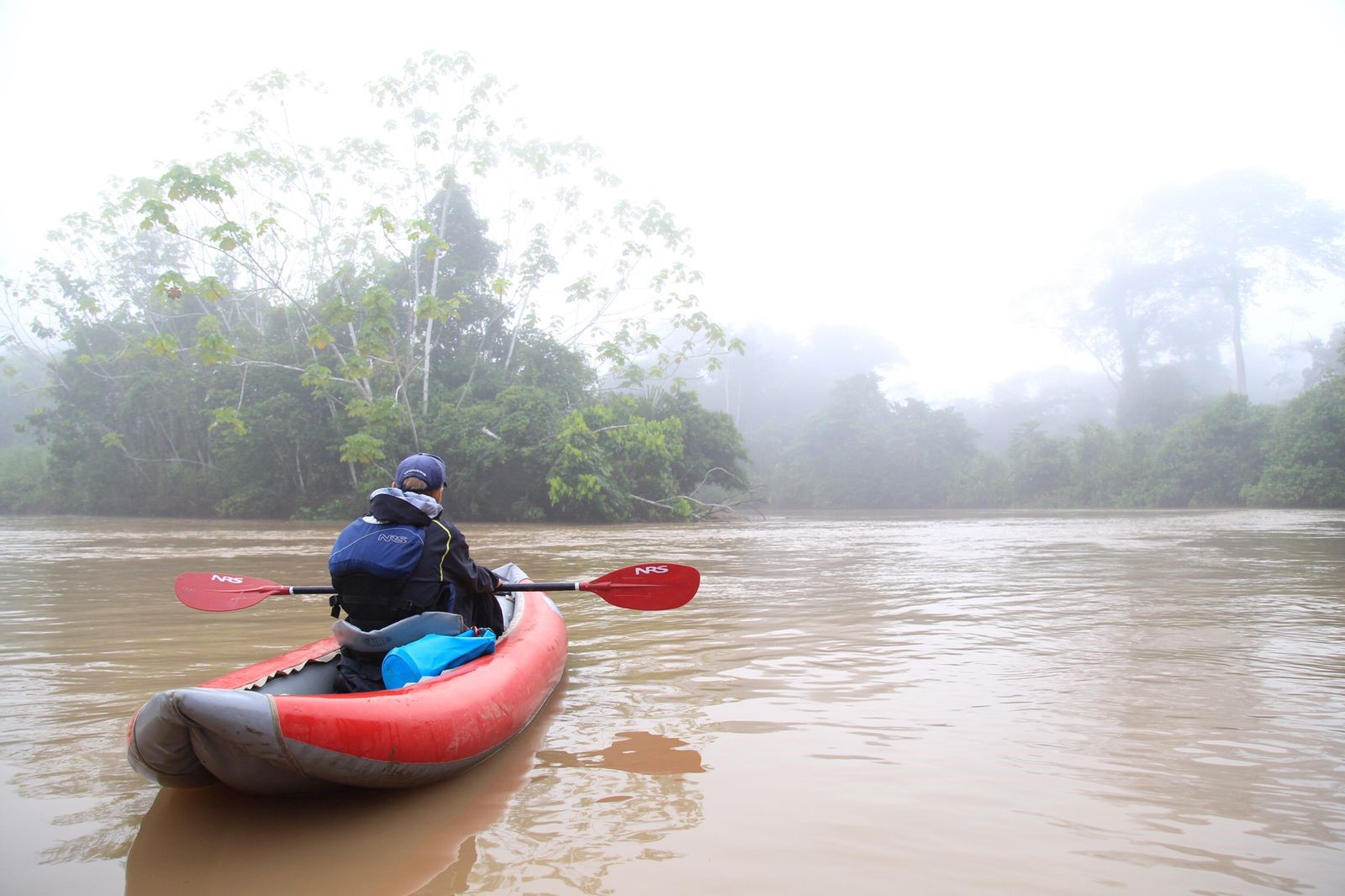
Waorani Tribe Kayak Expedition
7 days, 6 nights
From US$ 1599

13 Days Exploring Ecuador’s Highlands And Rainforest
13 days, 12 nights
From US$ 1795

12 Days Ecuador’s Greatest Hits A Bucket-List Adventure
12 days, 11 nights
From US$ 1315

8 Days in Ecuador’s Heartland: From Mountains to Hot Springs
8 days, 7 nights
From US$ 1080

14 Days Visit the culture of Ecuador
14 days, 13 nights
From US$ 2620
FAQs
FAQs provide clear and detailed answers to your most common questions about our tours, destinations, and responsible travel practices. From trip preparation to sustainability commitments, this section is designed to ensure you have all the information you need for a seamless and meaningful travel experience. Explore our FAQs to plan your journey with confidence and ease.
GALAPAGOS TRAVEL PACK LIST
The most important: if you are on any treatment that requires regular intake of any medicines or allergic, please make sure you have enough of the medicines for the period of your stay. Please also consult your physician and follow his recommendations related to the trip. Do not forget the prescription copy in case the medicines require it.
Documents
Check the set of papers to take with you: passport, travel documents, tickets, travel insurance (it is absolutely necessary to travel in Ecuador), vaccination certificates (if any).
Luggage
- One large backpack or one duffel bag or suitcase (max. 20 kg)
- One small daypack (max. 6 kg)
- If you use several means of transportation (aircrafts, buses, canoes etc.) during your travel in Ecuador, it is imperative to limit your luggage. Luggage not needed can be stored in your city hotel. If going into the jungle or doing active travel, it is also better to travel with backpacks instead of suitcases.
Clothing recommendations:
- Comfortable, casual clothing is recommended aboard the ships.
- Windbreaker type jacket
- Long pants, shorts
- Light sweater (nights could be colder)
- T-shirts,
- Shirts/blouses
- Socks
- Underwear (avoid synthetics)
- 1 Brim hat
- Bathing suit.
- Sunglasses with a strap.
Footgear
- 1 pair of comfortable walking or hiking shoes or sandals
- 1 pair of sneakers or sports footwear
- 1 pair of thongs or Tevas
Medicine
- Extra eyeglasses/contact lenses.
- Sun block lotion (at least protection 8).
- Insect repellent.
- Toilet kit.
- Tampons or sanitary towels (available in the cities)
Equipment
- We recommend bringing your own snorkel equipment
- Flashlight (headlamps models are better).
- Alkaline batteries (available in the cities)
- Self-sealing plastic bags.
- Dry bags
- Reading material
- Small notebook and pencil.
Cameras & Binoculars:
- Films and batteries can be purchased in Santa Cruz and San Cristóbal. Do not forget the chargers for your cameras. We also recommend you to have an extra memory card for your cameras with you. Water-resistant padded cases are a necessity.
SAFETY
Ecuador is quite a safe country to travel to. Nevertheless, you should not leave your valuables unguarded. Thefts could occur especially in places that are frequently visited by tourists, such as the historic center of Quito. It’s best to carry your valuables in money-belts, which can be worn underneath your clothes.
It is also recommended to join a group of other people when traveling alone.
MEDICAL ISSUES
Unless you enter Ecuador from a country where yellow fever is a risk, vaccinations are not mandatory when traveling to Ecuador. However, we recommend the following vaccinations:
- Tetanus and Polio
- Yellow Fever and Typhoid (if you plan to stay for more extended periods in the jungle)
- Hepatitis A+B
- Malaria prophylaxis (if you plan to stay in the coastal areas and Amazon Basin)
- Cholera
Please contact your family doctor or visit the nearest tropical diseases Institute to make all the necessary arrangements before coming to Ecuador.
MONEY AND MONEY EXCHANGE
It is recommended to exchange money in Ecuador, as the exchange rate is much better here than in Europe. You should take USD in cash with you or traveler’s checks.
The most common credit cards to pay with or to draw cash are American Express (Banco de Guayaquil), Euro/MasterCard (MasterCard Bank) and Visa (Banco de Guayaquil). In the cities, you will be able to use your credit card in many places, but when paying cash you can save up to 10%.
CONSERVATION
The beauty and the variety of the Galápagos Islands can only be protected if tourists follow the rules given by the National Park. These rules are the following:
- Do not touch the animals, as they will smell differently and therefore be left by their parents.
- Do not give food to the animals, as this has a negative impact on the animal’s behavior.
- Do not chase animals, and especially not those that are in their nesting place.
- Do not remove animals or plants from the island.
- Do not buy souvenirs that have been made from animal or plant parts.
- Do not bring plants or animals from the mainland to the islands, or from one to another, as each island has its unique ecosystem.
- Do not throw garbage away.
- Do not leave your name or initials on trunks or rocks.
- Please inform careless visitors about the park rules.
PHOTOGRAPHY
It is not allowed to take pictures of military zones and police stations. Please be sensitive when taking pictures of people. Please ask them kindly and explain why and for what reason you would like to take a picture.
TRAVEL SEASON AND CLOTHING TO TAKE
The climate is appropriate for traveling all year long. On the coast, the Oriente, and the Galápagos Islands; light and breathable clothing are recommended. When traveling to the highlands, you should consider taking warmer clothes. A raincoat is always suitable. Those planning to do mountain-climbing need special equipment, which can also be rented in Quito.
BEGGARS
In front of the churches and historic sights, you occasionally find old and disabled people, who get alms from the locals. In the major cities, numerous children are walking through the streets begging for money, children working as shoeshine-boys at the age of four or five are a common encounter.
In the end, it is up to you if you wish to give them money and how much. To give these kids an opportunity to earn money, you can let them clean your shoes without needing to have a guilty conscience.
TRANSPORT
City buses and taxis in Quito are not expensive. In the front glass of the buses, it is indicated where they go to. They stop when you wave your hand on almost all roads. It is possible to get off the bus at every time. A single ticket costs about 25 to 35 cents, no matter how far you want to go, as long as it is within the city center.
There are also many taxis available. Taxis will stop on a hand signal. During the day the price is based on a taximeter. After 8 in the evening, the price should be negotiated beforehand.